

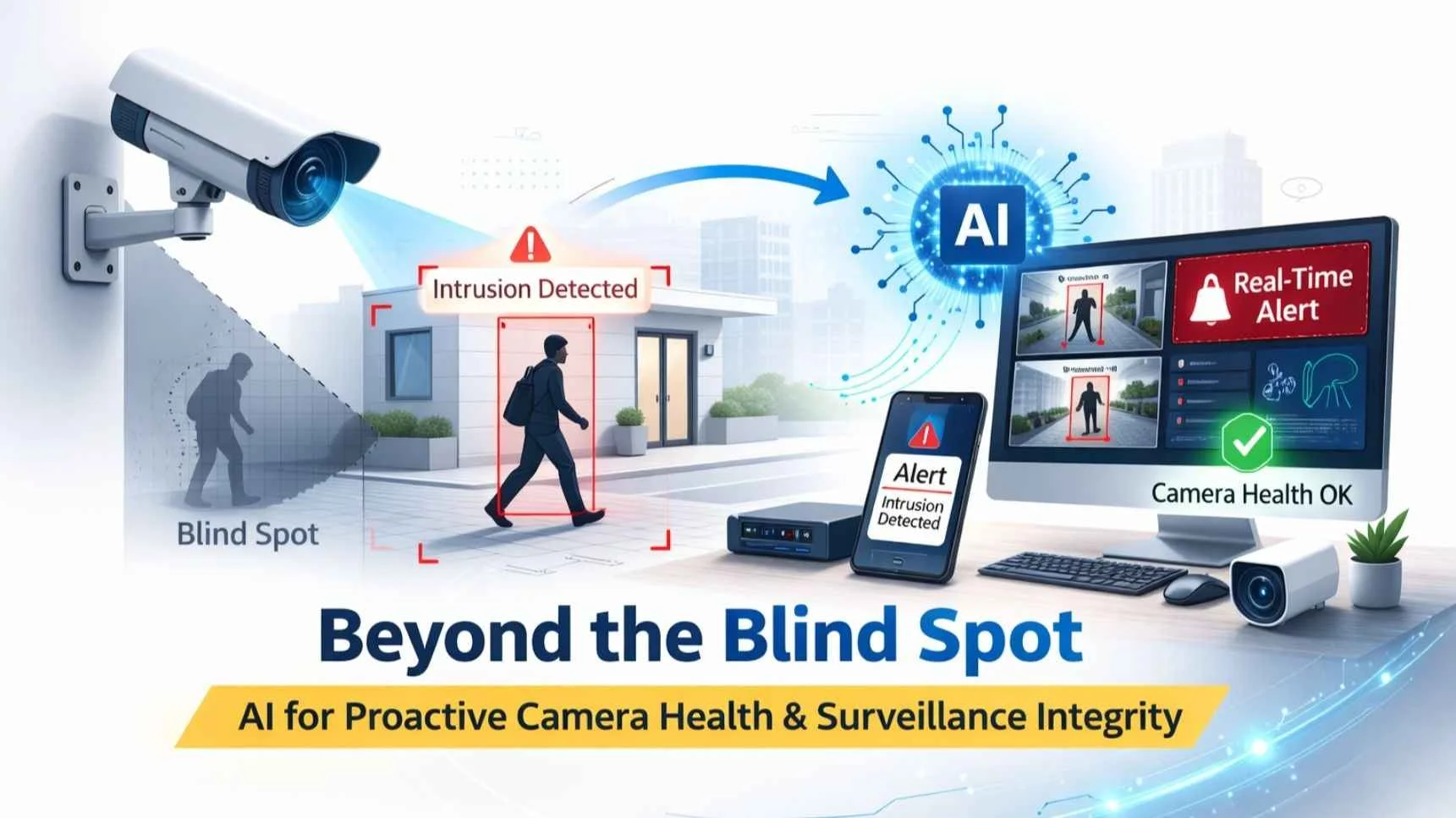
A massive camera system is only step one in physical security. The real operational vulnerability is rarely a lack of cameras it is the silent failure of the ones you already installed.
By deploying an automated camera monitor layer, the infrastructure polices itself. A Camera Health Monitoring system actively tracks the operational status of every connected device. Instead of waiting for a manual check, the AI engine continuously hunts for specific feed anomalies:
- Video loss and connectivity failures
- Frame freezes
- Low brightness
- Focus issues
When an anomaly occurs, maintenance teams receive an immediate escalation via a centralized dashboard. This minimizes downtime and ensures 100% monitoring coverage across critical zones like hospital wards, retail chains, and government transport hubs.
The Human Threat: Sabotage and Tampering
The most direct threat to CCTV systems is intentional interference. Before attempting a theft or perimeter breach, perpetrators frequently try to neutralize the surveillance layer.
Traditional systems only record the tampered feed after the fact. An active Camera Tampering Detection protocol spots suspicious activities such as sudden lens blocking, angle shifts, or manual disconnections in real time. You can view the instantaneous alert logic of this system in the field via our operational video demo.
For banks, ATMs, and high-risk retail environments, this triggers a dashboard ping before surveillance is fully compromised. It acts as a proactive deterrent, drastically reducing the risk of vandalism.
Environmental Blind Spots: Poor Visibility
Even when hardware is functional and secure from tampering, physics still applies. Poor visibility caused by fog, smoke, industrial glare, or low lighting renders optical sensors useless.
Rather than waiting for an operator to notice a degraded feed, an AI Poor Visibility Detection system constantly evaluates lighting levels and video clarity. Whether it is a highway tunnel choked by fog or an industrial work zone facing sudden darkness, the system notifies operators immediately. This enables rapid corrective action to restore operational awareness, prevent accidents, and meet strict safety audit standards.
Beyond Security: Operations & Efficiency
The real value of video analytics for security often lands outside the security department. When applied correctly, these systems solve operational headaches across the enterprise.
The Engineering Reality: Integration Over Replacement
When evaluating AI surveillance software, CTOs and plant heads look at the infrastructure impact. Ripping out legacy hardware to install expensive smart cameras is rarely viable.
Modern smart surveillance security solutions are designed for software-side integration. They interface directly with your existing IP camera network. The goal is to upgrade passive infrastructure into a proactive diagnostic grid without laying new conduit or installing new mounts.
In Conclusion: A surveillance grid is only as strong as its weakest, unmonitored node. Automating the detection of hardware faults, human tampering, and environmental blindness guarantees continuous asset protection. To see how these visual AI frameworks apply to specific industrial environments, review our documented Case Studies. If you are a technology integrator looking to expand your capabilities, explore the requirements of our Become A Partner program. For technical specifications, or to schedule a feasibility assessment of your current camera infrastructure, reach out to our engineering team via the Contact Us page, or explore our broader capabilities at the Marwiz Vision homepage. For further discussions, Contact our team.
Ready to get started?
Are you exploring your digital signage project needs (software and content)? Looking for just the digital signage display software or a full-scope proposal? Interested in a custom software solution tailored to your specific requirements? Would you like a personalized software demo?