

Most facilities already have cameras covering entrances, waiting areas, and busy public spaces. The challenge is not seeing what is happening. The challenge is understanding it.
A crowded lobby is easy to spot. Knowing when it started getting busy is much harder.
Most facilities do not struggle because they lack cameras. They struggle because they lack visibility.
When a Space Gets Busy, Nobody Notices Right Away
The room felt normal ten minutes ago. Nobody remembers exactly when things became busy. Somebody asks if more staff are needed. Everyone suddenly realizes the waiting area is full.
Most teams are not counting people all day. They are answering questions, helping customers, and dealing with whatever is directly in front of them. Nobody is watching occupancy numbers minute by minute. Busy periods have a habit of sneaking up on people. The atmosphere changes quickly, and teams are forced to react rather than plan ahead.
Why Traditional CCTV Leaves Teams Guessing
Traditional CCTV just watches. It records video so someone can look at it later. It rarely answers the immediate question on the floor.
Without actual numbers, even simple questions get hard to answer. Is the lobby getting busier? Will the current team handle the afternoon rush? Has occupancy already crossed a comfortable level?
Conventional cameras record activity, but they cannot automatically count people. Tracking footfall accurately is mostly guesswork. Enforcing capacity limits becomes a matter of intuition rather than fact. Without real-time data, managers are left making decisions without seeing the full picture.
Turning Existing Cameras Into a People Counting System
This is where a people counting solution starts making a difference. Instead of just recording footage, the software turns those video feeds into actual numbers.
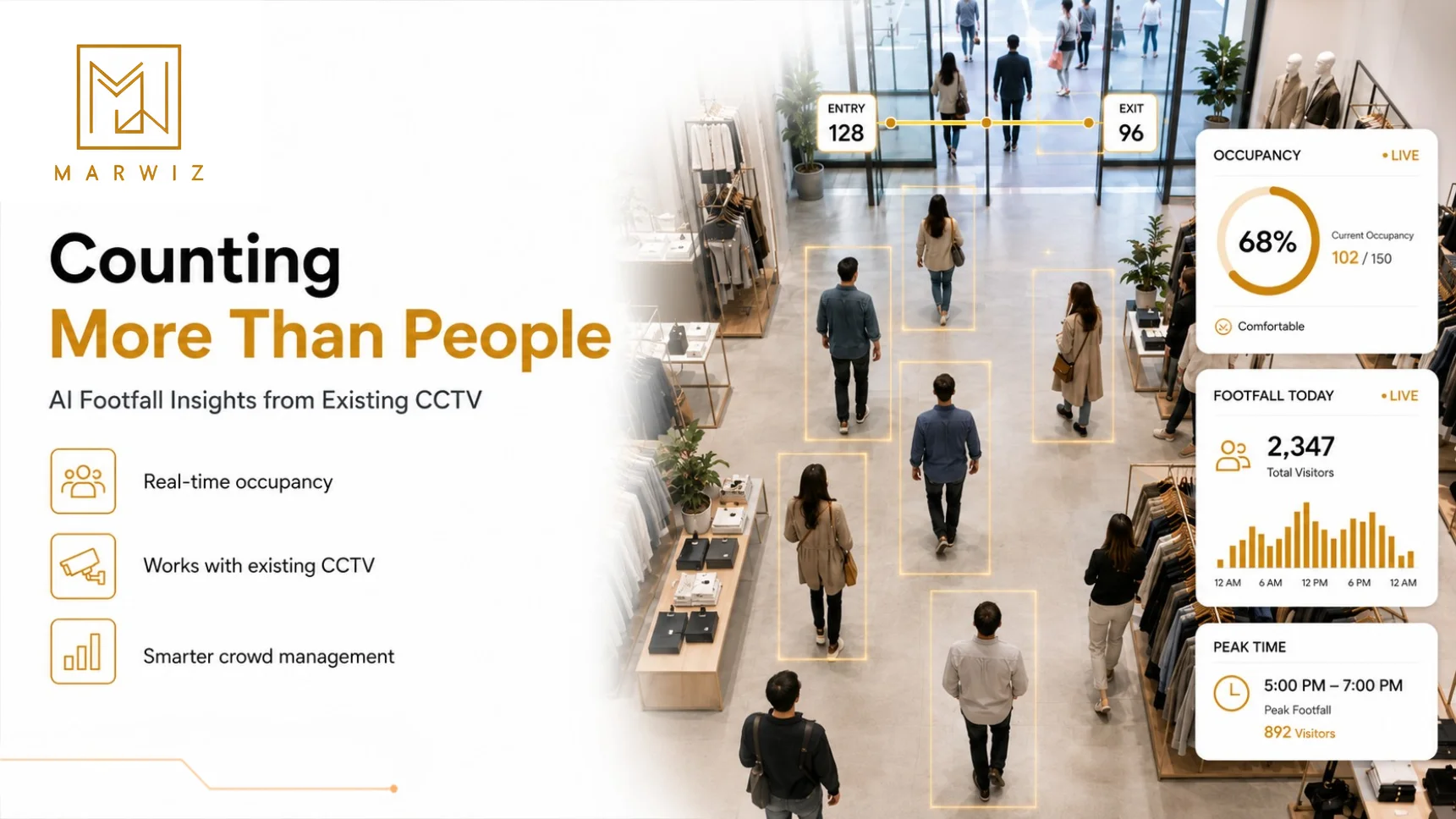
Marwiz Vision's people counting detection uses existing cameras to count individuals in real time. Because the system works with current CCTV infrastructure, facilities do not need to start from scratch. With this ai video surveillance, teams no longer have to rely on assumptions.
Why Real-Time Footfall Data Changes Daily Operations
Getting those numbers in real time changes the way daily operations are managed. When managers know exactly what is happening, they can make immediate staffing decisions. Instead of playing catch-up, teams can handle resource allocation before a bottleneck forms.
Real-time data replaces uncertainty with clarity. If occupancy starts climbing unexpectedly, you can shift staff to where they are needed most. This kind of visibility supports safer operations and helps prevent overcrowding in critical areas.
Different Spaces Need Different Kinds of Visibility
Not every environment tracks numbers for the same reason. Retail managers worry about traffic patterns because some hours are far busier than others. Knowing when footfall peaks helps them align staffing and keep service moving smoothly.
Hospitals face a different problem entirely. Waiting areas can become crowded faster than anyone expects, making real-time tracking essential to help control crowding for smoother operations.
Meanwhile, transport hubs deal with constant movement. Passenger numbers change quickly, especially during rush periods. Having a clearer picture of those changes helps teams maintain safety and manage crowds more effectively.
The challenge changes again inside offices and corporate buildings. Facility managers there often need a clearer picture of exact occupancy to ensure compliance with safety and occupancy regulations.
Large events and exhibitions are different altogether. Some areas fill up almost immediately, and organizers rely on real-time crowd insights to manage the flow of attendees more effectively.
What Starts to Appear After a Few Weeks
Getting real-time numbers changes the current shift, but something else happens after a few weeks. You start seeing patterns that were easy to miss before.
Monday mornings look entirely different from Friday afternoons. Some entrances stay busy longer than others. The lunch hour always creates pressure in specific corridors, while a waiting area that seems quiet in the morning reliably becomes crowded just after two o'clock. Patterns emerge once you start looking at real data.
Over time, planning becomes easier too. You can explore these broader capabilities on our features page. Looking at these patterns regularly makes it easier to allocate resources and plan ahead.
Counting People Was Never Really the Goal
Most facilities already have the equipment they need hanging on the ceiling. The difficult part is understanding what the crowd is trying to tell you.
Counting people is only the beginning. Knowing what those numbers mean is where better decisions start.
If understanding occupancy or managing crowd visibility is becoming difficult, our team can help evaluate your current setup. Connect with us to discuss whether this approach makes sense for your environment.
Ready to get started?
Are you exploring your digital signage project needs (software and content)? Looking for just the digital signage display software or a full-scope proposal? Interested in a custom software solution tailored to your specific requirements? Would you like a personalized software demo?